
Coming Soon
Hockey Off-Season Program
The Hockey Off-Season Program is a 16-week off-ice training program designed to develop speed, strength, balance and power for hockey, with parallel Speed and Strength tracks across four progressive phases.
Reviewed by Dave Boyer, ATC, CSCS · Updated
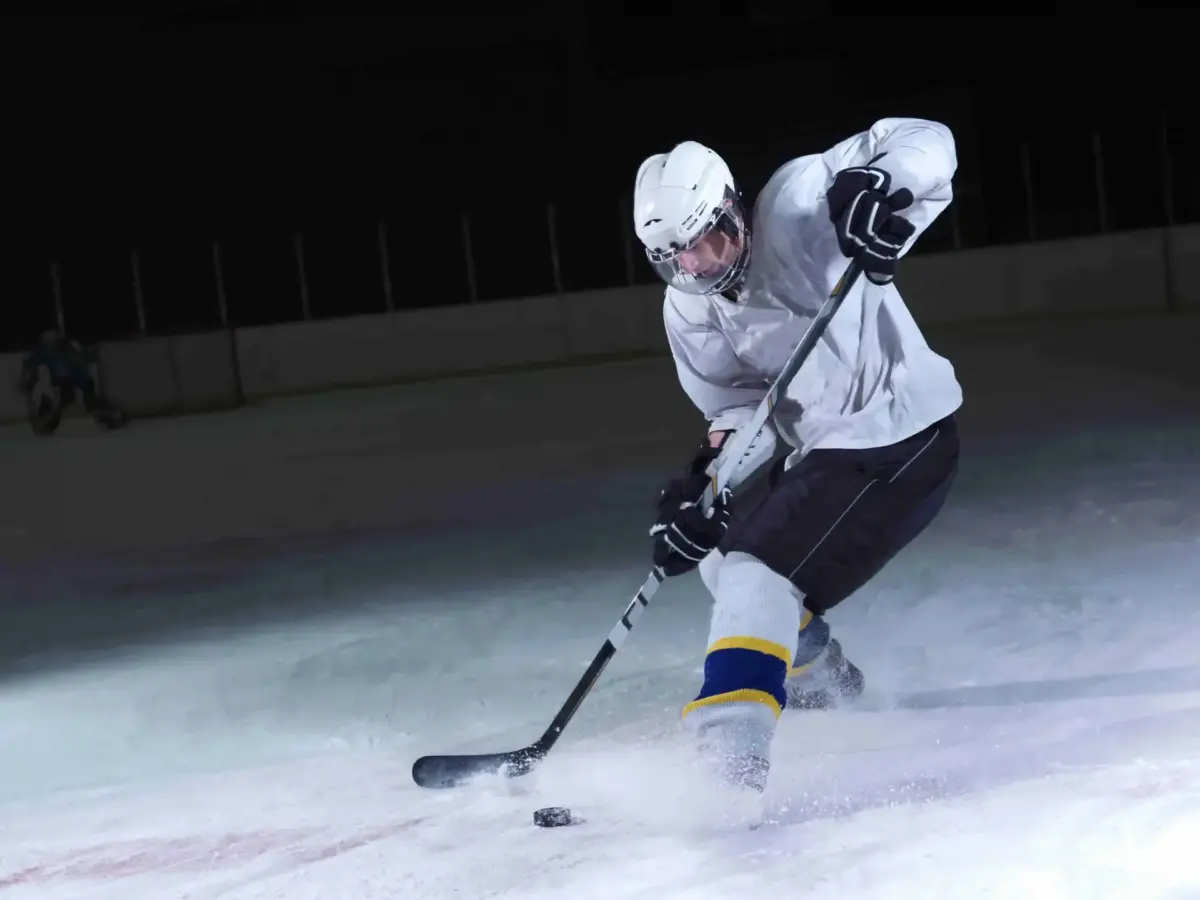
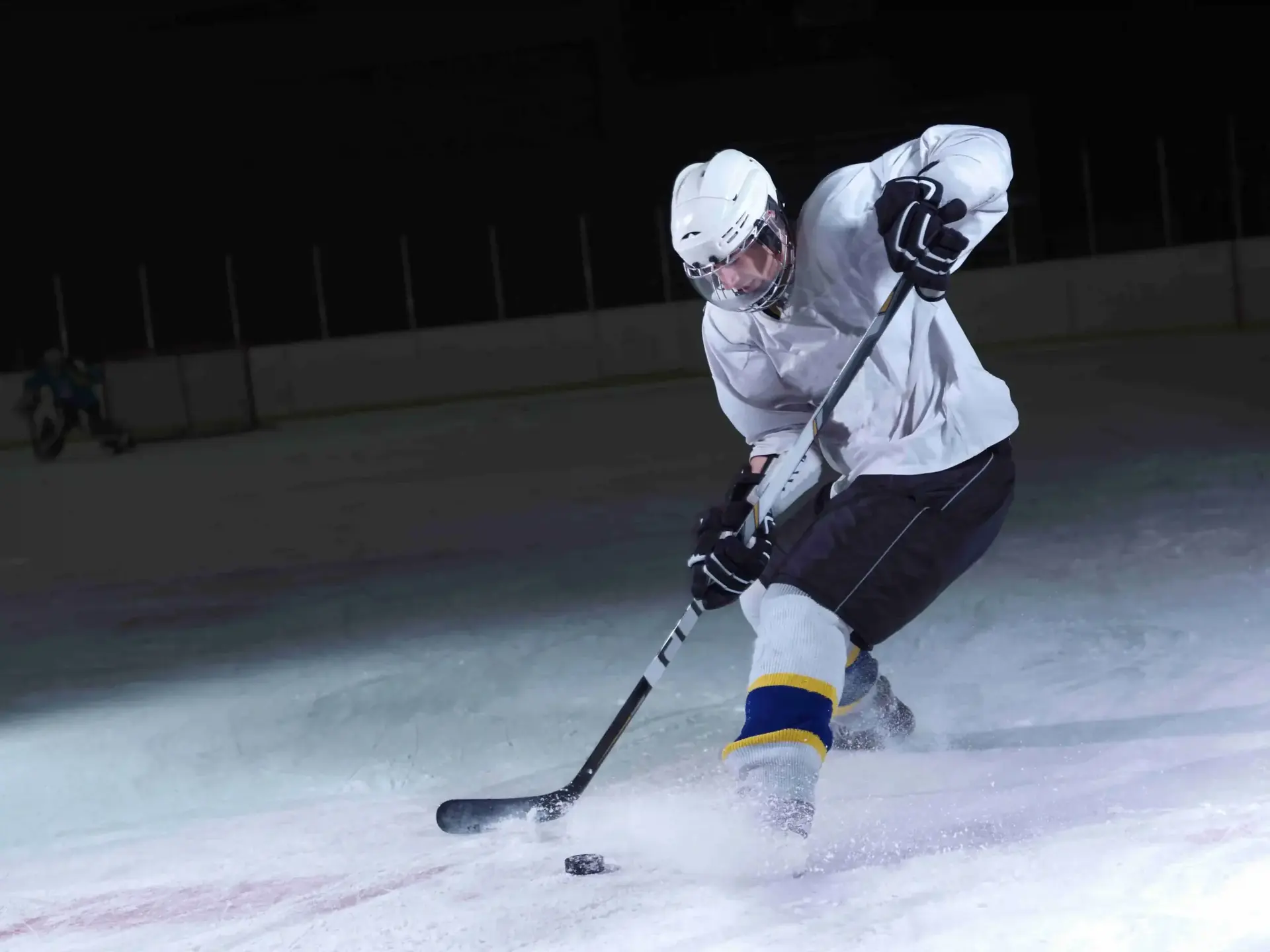
The Hockey Off-Season Program Built for Speed, Strength and Power on the Ice
A structured, 16-week off-ice program that trains speed and strength side by side — designed to help hockey players start the season with a more powerful stride, a quicker first step and more control on their edges.
Designed by Dave Boyer, ATC, CSCS · 36 Years of Experience · NHL Clinical Experience with the Tampa Bay Lightning and Florida Panthers · Coming Soon to the Exercise Innovation Web App
Why the Off-Season Matters
The Off-Season Is Where Faster, Stronger Hockey Players Are Built
A hockey season asks a lot of your body. Between games, practices and travel, there is little time to build anything new — most of the season goes into recovering and maintaining what you already have.
The off-season is your window to build. With no games on the schedule, you have time to develop the physical qualities that show up on the ice: a more powerful stride, a quicker first step, better balance on your edges, and the strength to hold your ground in battles.
Hockey asks the body to move in a very particular way. Every stride pushes off one leg and out to the side, every turn and crossover is made on a narrow edge, and every shot and pass is powered by rotation through the hips and trunk. Off-ice training for hockey should be built around those movements.
Exercise Innovation’s Hockey Off-Season Program is built around those demands. Over 16 weeks and four progressive phases, a Speed track and a Strength track work side by side — designed to help you return to the ice faster, stronger, more balanced and more powerful.
Program Overview
4 Phases. 16 Weeks. Two Tracks.
A progressive off-ice system for hockey players — every phase laid out, explained and tracked, so you always know what comes next.
The Exercise Innovation Hockey Off-Season Program is a 16-week off-ice training system divided into four progressive phases of four weeks each. Each phase builds directly on the last — moving from core control, balance and strength endurance to single-leg strength, total-body strength and, finally, reactive speed and power.
Two training tracks run in parallel through every phase: Speed Development and Strength Development. Each phase comes with its own instructions and progress tracking, and a to-do calendar lays out your training.
| Program at a Glance: | |
|---|---|
| Length | 16 Weeks |
| Phases | 4 Progressive Phases — Weeks 1–4, 5–8, 9–12 and 13–16 |
| Training Tracks | Speed Development + Strength Development |
| Who It’s For | Hockey Players Aged 14 and Older — High School, Junior, College & Adult |
| Where to Access | Exercise Innovation Web App |
| Designed By | Dave Boyer, ATC, CSCS — 36 Years of Experience; Clinical Experience with the Tampa Bay Lightning and Florida Panthers (NHL) and the Detroit Vipers (IHL) |
| Status | Coming Soon |

Who Designed It
Built by a Coach with Pro Hockey Experience
The Hockey Off-Season Program was designed by Dave Boyer, ATC, CSCS — founder of Exercise Innovation and a former NBA trainer with 36 years of experience in rehabilitation and sports performance.
Dave’s clinical experience in professional hockey includes three years with the Tampa Bay Lightning and two years with the Florida Panthers in the NHL, and six years with the Detroit Vipers in the IHL. He also spent six years with the Detroit Pistons in the NBA and is a mental performance coach.
Exercise Innovation (EI Sports, LLC) is based in Clinton Township, Michigan, and serves athletes online across the US.
Who It’s For
Built for Hockey Players at Every Level
Whether you’re a 14- or 15-year-old building your first real off-season, a high school or junior player competing for ice time, a college player preparing for a demanding season, or an adult player who wants to stay strong and quick on your skates — this program was built for you. It is recommended for players aged 14 and older; players aged 12 or 13 should follow it only with a qualified coach supervising their technique and loads.
The four phases start with the foundations — core control, balance and strength endurance — and progress step by step toward reactive speed and full-body power, so each block prepares you for the next.
Who it’s for
- You want a more powerful skating stride and a quicker first step
- You want better balance and control on your edges — through crossovers, cuts and quick changes of direction
- You want more strength in puck battles and more rotational power behind your shots and passes
- You’ve trained in the off-season before but never followed a structured, phase-based system built for hockey
- You want a program designed by a coach with NHL clinical experience — not a generic gym plan
- You want clear instructions, a training calendar and progress tracking for every phase
Who it’s not for
- Players looking for on-ice skills coaching — this is off-ice athletic development that complements your on-ice practice
- Athletes who are currently injured — follow the guidance of your doctor, physical therapist, athletic trainer, or qualified care provider
- Players under 12 — the program is built around free weights and Olympic-style lifts
How It Works
Two Tracks, Trained Side by Side
Every phase runs a Speed track and a Strength track in parallel — designed so the strength you build off the ice supports how fast, how stable and how powerful you are on your skates.
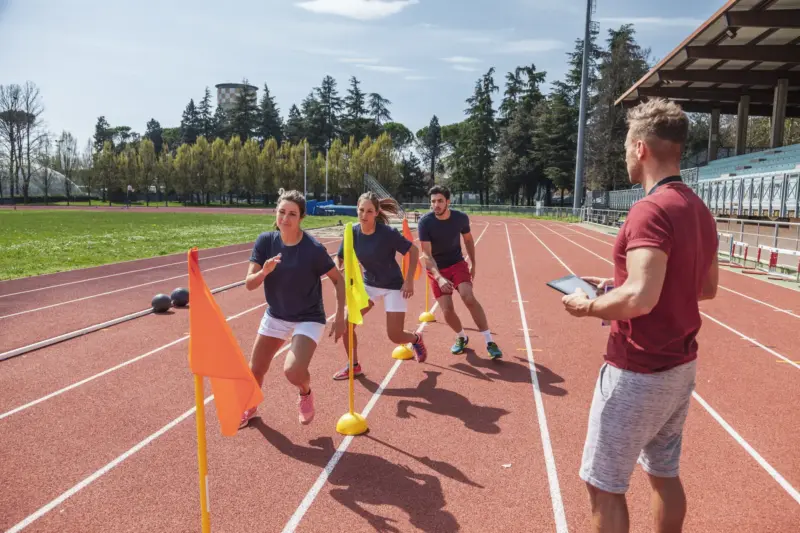
Speed Track
Designed to build a more powerful stride, a quicker first step and sharper reactive change of direction — progressing from balance and linear speed to acceleration and reactive agility.

Strength Track
Designed to build the core, hip and leg strength behind every stride and turn it into power — progressing from strength endurance to single-leg strength, total-body strength and explosive power.

Built-In Progression & Tracking
Four phases of four weeks each, every one with its own instructions and progress tracking, plus a to-do calendar — so you always know what to train next and can see how far you’ve come.
The 4 Phases
16 Weeks. Four Phases. Each One Building on the Last.
Each phase lasts four weeks and runs the Speed and Strength tracks side by side. Every block builds on the one before it — from core control and balance, to single-leg and total-body strength, to acceleration and, finally, reactive speed and power.
Phase 1
Core, Balance & Strength Endurance
Weeks 1–4
Speed Development
- Core activation and a dynamic warm-up that prepare the body for every session
- Balance training in the athletic stance and Mohawk position — designed to build stability in the positions you skate in
- Resisted linear-speed work designed to develop a stronger push-off in your stride
- Non-countermovement bounds that teach you to produce force from a still start — the base for a quicker first step
- Energy-system work that starts building your conditioning for repeated shifts
Strength Development
- Strength endurance at 15 reps per set, designed to prepare muscles and connective tissue for heavier loads in later phases
- Core and adductor (groin) strength, plus dynamic flexibility for the hips
- Balance work in skating positions that connects strength with stability
- First power work — jumps and hops from a still start — to begin developing explosiveness
Focus: Build the base — core control, balance in skating positions and the work capacity to handle what comes next.
Phase 2
Single-Leg Strength, Foot Speed & Stability
Weeks 5–8
Speed Development
- Foot-speed and stability work designed to keep quick feet balanced and under control
- Band-resisted stability drills that challenge your stride against forward and lateral pull
- Reactive “neuro” warm-ups designed to sharpen how quickly you respond and return to a strong base
- Countermovement jumps that start turning strength into elastic, explosive power
- Rotational ab training for the trunk control used in shooting, passing and battles
Strength Development
- Single-leg strength at 10–12 reps — every stride pushes off one leg at a time
- Linear and lateral bounds designed to build power through the skating push-off pattern
- Balance-board trunk rotation to train stability while the upper body turns
- Glute, hip and trunk work designed to support a stable pelvis through the stride
Focus: Single-leg control and stability-driven quickness — the foundation of a stronger stride.
Phase 3
Total-Body Strength & Acceleration
Weeks 9–12
Speed Development
- Acceleration from a forward lean, lateral half-kneeling and prone starts — designed to help you get up to speed from the different body positions a game puts you in
- Acceleration-stability work against bungee and band resistance, designed to keep your first strides powerful and controlled
- Medicine-ball rotational throws designed to develop rotational power for shooting and passing
- Dynamic flexibility for the hips and trunk rotation, plus deceleration work for stopping under control
Strength Development
- Total-body strength at 10–12 reps — lower-body, pressing and full-body lifts — designed to build the force behind your stride and your strength in battles
- Lateral and deceleration strength work designed for control in crossovers and hard stops
- Loaded carries designed to build trunk stability and grip strength
- Hops with rotation designed to build control when you land and turn
Focus: Strength through the whole body and an explosive first few strides.
Phase 4
Power & Reactive Change of Direction
Weeks 13–16
Speed Development
- Reactive change-of-direction drills — lateral shifts and quick exchanges — designed to sharpen how fast you react and cut
- Balance work through crossover and lateral-push patterns, designed for control on your edges at speed
- Lower-body-driven medicine-ball throws designed to connect leg drive with trunk rotation — the chain behind a powerful shot
- Lateral and vertical hops for quick, elastic power
- Thoracic (upper-back) core work for rotation and posture
Strength Development
- Power training with chains (accommodating resistance), designed to develop strength and speed together
- Explosive hip-extension work designed to add drive to your stride
- Functional strength performed in skating positions
- Countermovement hop-and-bound sequences that combine strength, balance and elastic power
Focus: Peak power and reactive agility — every phase brought together before the season starts.
Core activation, balance, dynamic flexibility and energy-system work run through all four phases — the foundation everything else is built on.
This program is designed as sports performance and recovery support. Athletes should always follow guidance from their doctor, physical therapist, athletic trainer, or qualified care provider.
On-Ice Benefits
How the Program Helps You on the Ice
Each part of the program targets a quality hockey players rely on in every game:
A More Powerful Skating Stride
Single-leg strength, hip and adductor work, and lateral bounding designed to put more force into every push-off.
A Quicker First Step
Acceleration training from game-like starting positions, designed to help you get up to speed faster.
Balance and Edge Control
Balance work in the athletic stance and Mohawk position, designed to keep you stable and in control on your edges.
Sharper Crossovers and Change of Direction
Lateral, deceleration and reactive drills designed to help you stop, cut and cross over with control.
Rotational Power for Shooting and Passing
Medicine-ball throws and rotational core training designed to link your legs, hips and trunk.
Strength in Puck Battles
Total-body strength and power work designed to help you hold your ground along the boards and in front of the net.
Conditioning for Repeated Shifts
Energy-system work in every phase, designed to support the repeated high-intensity efforts a game demands.
Mobility and Durability
Hip, groin and thoracic mobility work designed to help you move well and keep training consistently through a long season.
Plans & Pricing
Simple Plans, Each with a Free Trial
When it launches, the Hockey Off-Season Program will be offered as a monthly or a yearly plan, each starting with a free trial.
Enrollment isn’t open yet — join the list to be among the first to hear when it opens.
Monthly
$24.99/month
3-day free trial
Yearly
$285/year
7-day free trial
Coming Soon
This program isn’t open for enrollment yet. Leave your email and we’ll let you know when it launches.
Get Notified When It Launches
Not sure yet? Book a free information session
Hockey Off-Season Program FAQs
What is the Hockey Off-Season Program?
The Hockey Off-Season Program is a 16-week off-ice training program from Exercise Innovation, designed to develop the speed, strength, balance and power hockey players use on the ice. It runs two parallel tracks — Speed Development and Strength Development — through four progressive four-week phases, and each phase comes with its own instructions and progress tracking.
When does the Hockey Off-Season Program launch?
The Hockey Off-Season Program is coming soon — enrollment is not open yet. Join the “Get notified” list on the Hockey Off-Season Program page to hear when it launches, or book a free information session with our team in the meantime — no account or payment needed.
Who is the Hockey Off-Season Program for?
It is built for hockey players aged 14 and older — high school, junior, college and adult players — who want to use the off-season to become faster, stronger and more stable on their skates. The phases start with foundation work (core control, balance and strength endurance) and progress step by step from there. Athletes who are currently injured should follow the guidance of their doctor, physical therapist, athletic trainer, or qualified care provider.
What age is the Hockey Off-Season Program for?
The program is recommended for players aged 14 and older. Because it uses free weights and Olympic-style lifts, players aged 12 or 13 should follow it only with a qualified coach supervising their technique and loads, and players under 12 should stick to age-appropriate body-weight strength, speed and agility work. This is in line with youth hockey development guidance such as USA Hockey’s American Development Model, which introduces free-weight training in its “Train to Train” stage (ages 12–16 for boys and 11–15 for girls), timed to each player’s growth spurt.
How does the Hockey Off-Season Program help players on the ice?
It is designed to develop the physical qualities behind on-ice performance: a more powerful skating stride, a quicker first step, balance and edge control, sharper crossovers and change of direction, rotational power for shooting and passing, strength for battles along the boards, and the conditioning to repeat hard shifts. Core control and hip, groin and upper-back mobility are trained throughout the program.
How long is the Hockey Off-Season Program, and how is it structured?
The program runs for 16 weeks in four progressive phases of four weeks each: Phase 1 (Weeks 1–4), Phase 2 (Weeks 5–8), Phase 3 (Weeks 9–12) and Phase 4 (Weeks 13–16). In every phase a Speed track and a Strength track run side by side, building from core control, balance and strength endurance toward reactive speed and full-body power. Each phase has its own instructions and progress tracking, and a to-do calendar lays out the training.
How much will the Hockey Off-Season Program cost?
When it launches, the Hockey Off-Season Program will be available as $24.99/month with a 3-day free trial, or $285/year with a 7-day free trial. Enrollment is not open yet — join the “Get notified” list on the program page to hear when it opens.
Who designed the Hockey Off-Season Program?
The program was designed by Dave Boyer, ATC, CSCS — founder of Exercise Innovation and a former NBA trainer with 36 years of experience in rehabilitation and sports performance. His clinical experience includes the Tampa Bay Lightning (3 years) and Florida Panthers (2 years) in the NHL, the Detroit Vipers (6 years) in the IHL and the Detroit Pistons (6 years) in the NBA.
Is the Hockey Off-Season Program on-ice coaching?
No. It is off-ice athletic development — speed, strength, balance, power and conditioning training — designed to complement, not replace, on-ice practice and skills coaching.
Planning Your Hockey Off-Season?
Book a free information session with our team to talk through your off-season training — no account or payment needed.